

Defending the Crown: My WTC 2026 Story
September 30, 2026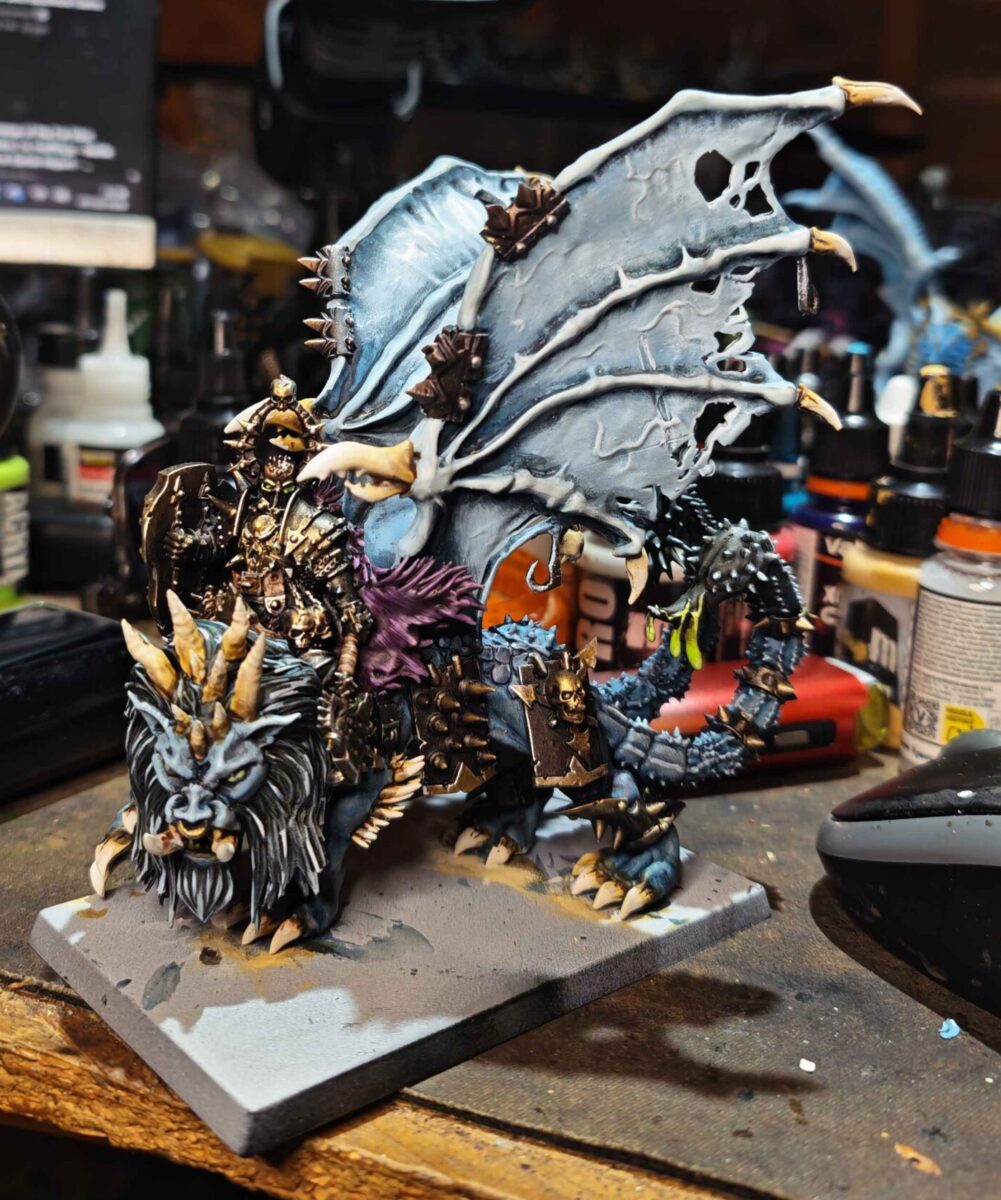
I’ve always felt that a Hordes of Chaos army should look like Chaos. Different creatures, customs and theologies crashing together into an army that has no particular business being in the same place, except that something powerful enough has brought them there. Mortals marching alongside Beastmen, monsters looming over both, and everyone with their own interpretation of what the gods want from them. That mixture is a huge part of the appeal for me.
I started playing Warhammer Fantasy in sixth edition, when mixing the different parts of Chaos was much more freely available. That image of the army has stayed with me ever since. The new Arcane Journal gave me the push to revisit it, and although we’re missing the Daemons, this is about as close as I can currently get to the sort of force that first caught my imagination.
There’s definitely an element of paying homage to my twelve-year-old self here. Let’s be honest, quite a lot of this hobby comes down to finally making something that a younger version of you would have thought was brilliant. In my case, that means a mixed Chaos army coming out of the frozen wastes, with pale warriors, strange creatures and rather more monsters than anyone on the receiving end would reasonably ask for.
The plan is to take it to Forgotten North and BCGT in November. That gives the project a purpose and, rather less conveniently, a deadline. I’ve started getting the models together, played my first practice game and already made some changes to the list. There’s still plenty to do, but I wanted to share the thinking behind it while it’s taking shape, rather than only show the finished army once all the decisions have been made.
Bringing the frozen wastes to the tabletop
I’ve wanted to build a frozen wastes army for a long time. Snowy bases, pale skin and cold blues, whites and greys are the starting point, with Viking aesthetics running through the mortal contingent. Add the monsters and it starts to feel like the force I’ve been imagining: a gathering from somewhere thoroughly unpleasant, making its way south to become somebody else’s problem.
One of the pleasures of doing this with Chaos is that the models don’t all need to share the same equipment, clothing or even anatomy. A certain amount of visual disagreement belongs in the army. The common requirement is broadly “evil”; the paint scheme and, especially, the basing can do much of the work of making them belong together. If everything looks as though it has travelled through the same frozen landscape, there’s room for quite a lot of variety above the snow.
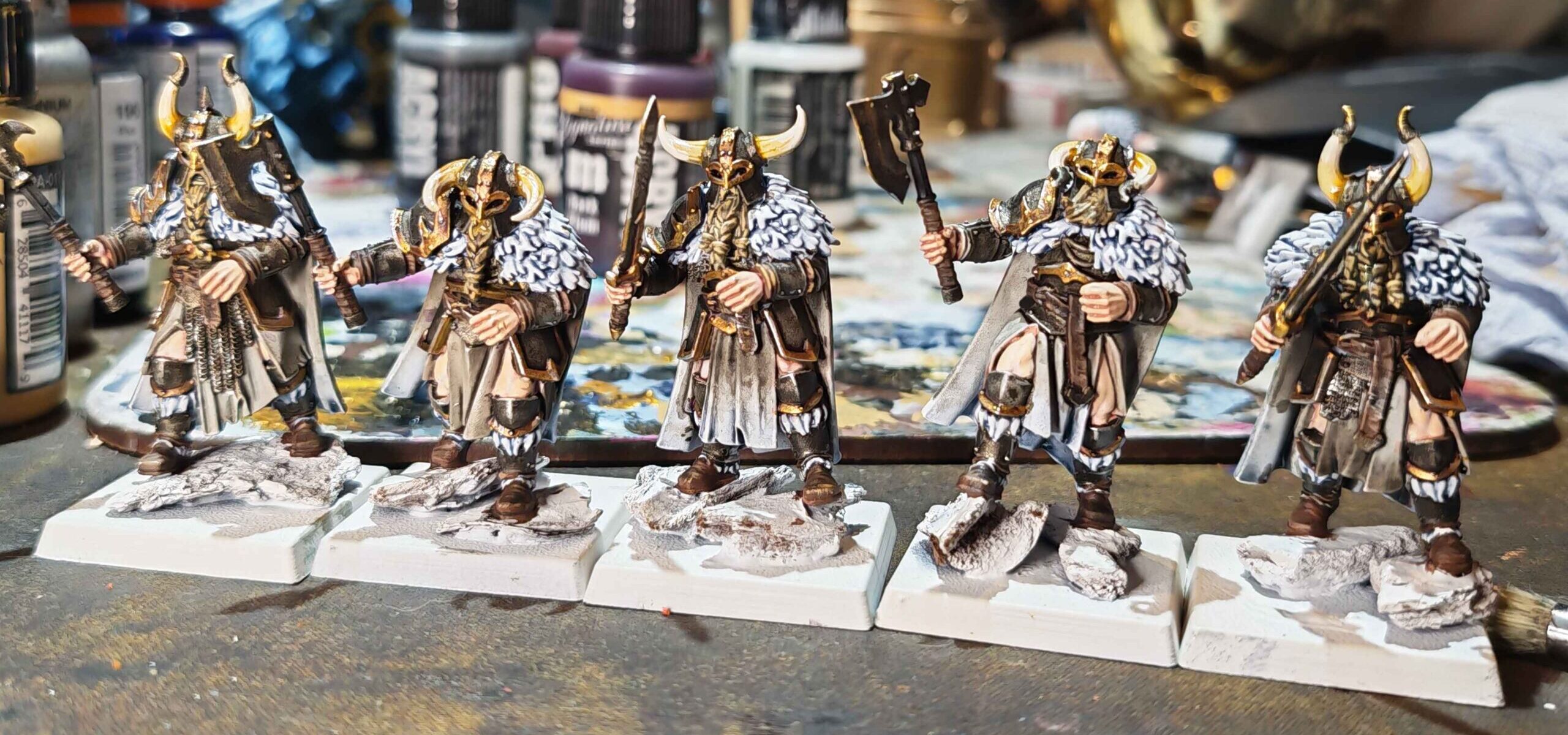
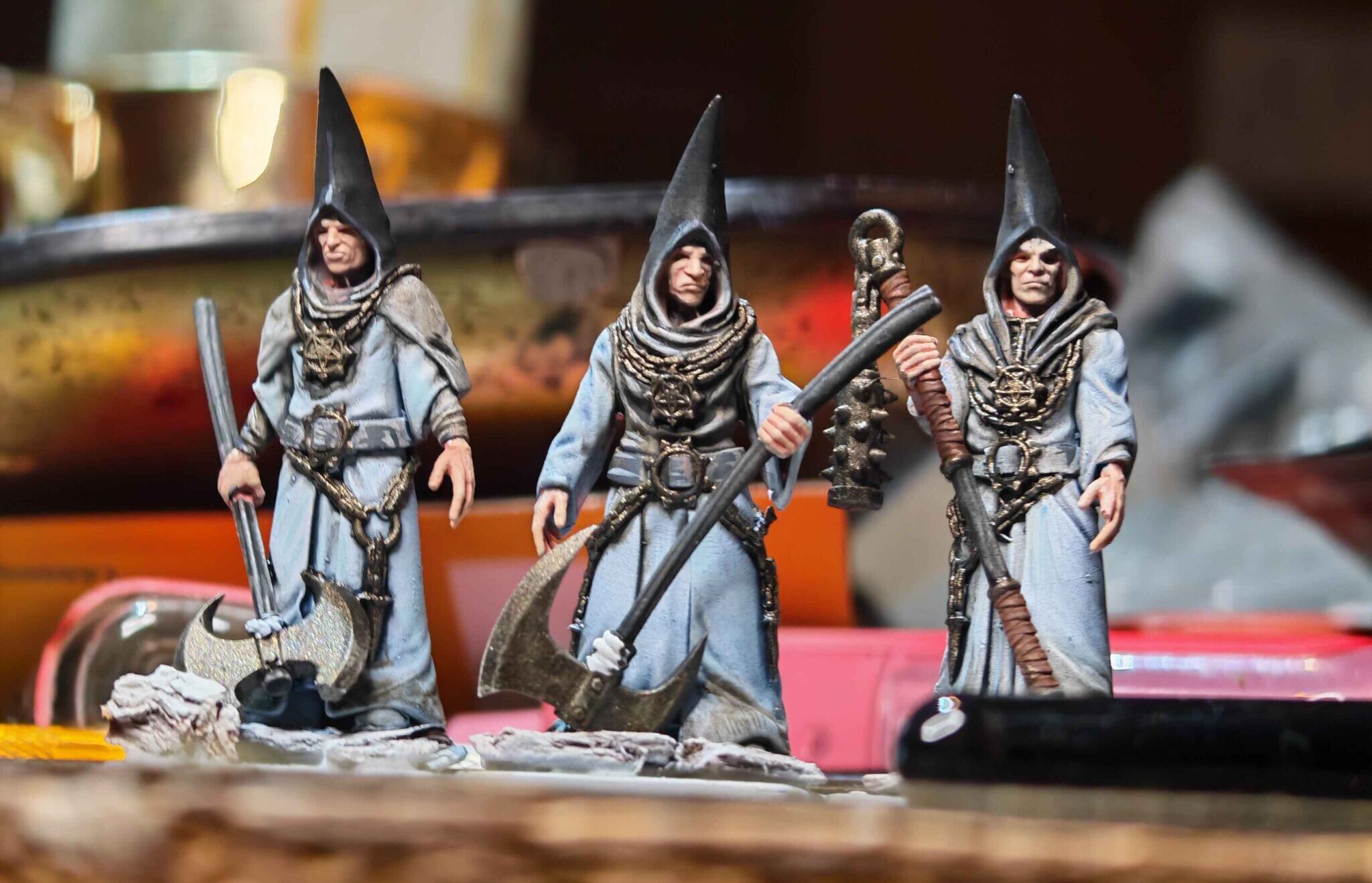
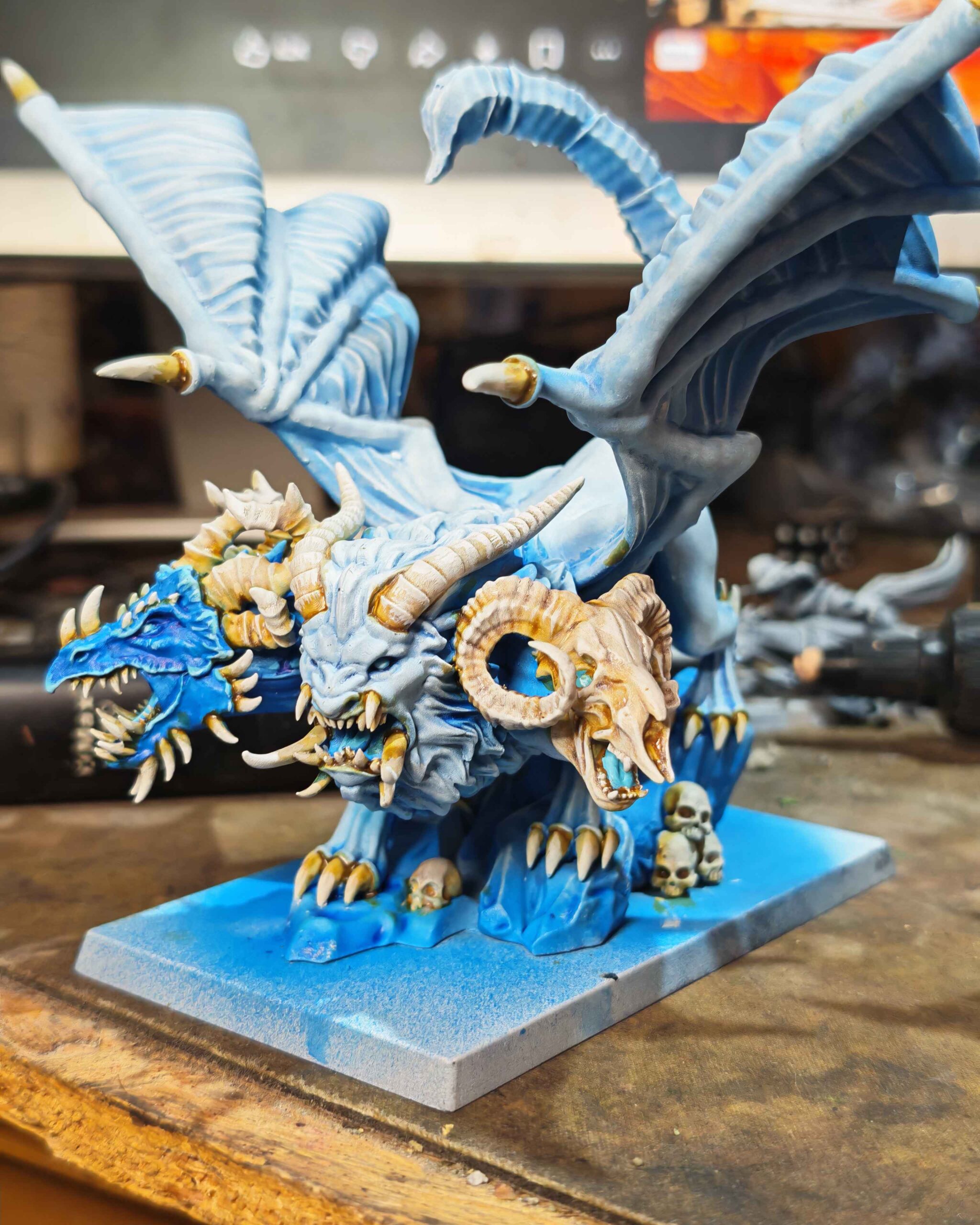
The Chaos Lord on Manticore is from Avatars of War, with two White Angel Chimeras alongside him. The cultists use Highlands’ Norse Raiders, while the Magisters are the keepers from Lost Kingdom’s “Blessed” Ogres. For the baggage train, I’m using Lost Kingdom’s Waba Yaga. It’s a mixture of sculptors, but that suits the project rather well.
I’ve made some adjustments to bring the models together, particularly increasing the size of the Magisters so they sit more comfortably alongside the others. I also mirrored some weapons on the norse raiders so now where they once had hand weapons and shields, they now have two hand weapons! That flexibility is one of the absolute godsends of printing. Finding a sculpt you love and discovering it’s a bit small doesn’t have to end the conversation; you can adjust the scale to suit the army you’re actually building.
There’s also a commercial side to the project, and I’d rather be open about that. This army is intended to be a marketing piece for UKResinPrint as well as something I want to play. I want to use models available through the shop and show what they can look like when someone builds a coherent army around them. That makes the process of choosing, adapting, painting and playing with them part of the story.
The Beastmen are the main unresolved piece. I own plenty already, so I can use older models while I work out what I really want. There isn’t an urgent need to settle for the first suitable thing I find. The challenge is bridging the gap between the creatures I picture living in the frozen wastes and the models I have available in the store. I want to get that choice right, because they’re an important part of what makes this feel like a mixed Chaos army in the first place.
Making the opponent look in every direction
That variety carries through into how I want the army to play. The list is built around attacking from several directions, with the Lord on Manticore and the two Chimeras operating as a little monster hit squad. They’re there to apply pressure and create a push and pull with the opposing army. If an opponent moves to deal with one threat, I want something else ready to exploit the space or opportunity that movement creates.
The ambushing infantry adds another layer to that problem. While the monsters are demanding attention, smaller units can appear in gaps, threaten vulnerable pieces and disrupt the battle line. Ideally, the opponent is having to think about where those units might arrive before they’ve even appeared. Every unit committed to protecting an approach is a unit that has fewer options elsewhere.
There’s a substantial amount of magic behind it all. The working list includes three Cult Magisters, a Bray-Shaman and a Great Bray-Shaman, with a bound item in one of the Gor units. My intention is to produce a lot of magic missile pressure from several sources, supporting the movement game and making it harder for the opponent to leave small or vulnerable units exposed.
Much of the infantry is intended to be useful against those smaller targets too. Additional hand weapons give it something to do once it reaches combat, while thrown weapons and support from Daemonology offer another way to cause damage. I like the idea of relatively modest units contributing throughout the game, rather than having everything rest on whether the monsters get the decisive fight they want.
Of course, that’s what I want the army to do. Getting all those threats to arrive in useful places, at useful times, is the part I need to learn. Having plenty of options in a list doesn’t automatically mean I’ll make the right decisions with them, which is why the practice games matter.
A first outing against the X-force
The first test was against my mate Matt’s Dwarf Expeditionary Force, or the X-force. It’s a hardcore gunline that usually mashes whatever is put in front of it, so it was a fairly direct introduction to the question of whether this army could apply enough pressure while being shot.
I got very close to breaking the Thunderstar, but failed a couple of important charges at the last minute. Those were frustrating moments, although I came away with plenty to think about beyond the failed dice. I’d had a chance to see how the army could threaten a difficult opponent, and the part that surprised me most was the cultists.
In that game, all my cultists were equipped with bows. Seeing where they could arrive and the positions they could occupy made me think much harder about what those units could achieve with different equipment. It’s the reason the current draft has moved towards a mixture, including units with two hand weapons.
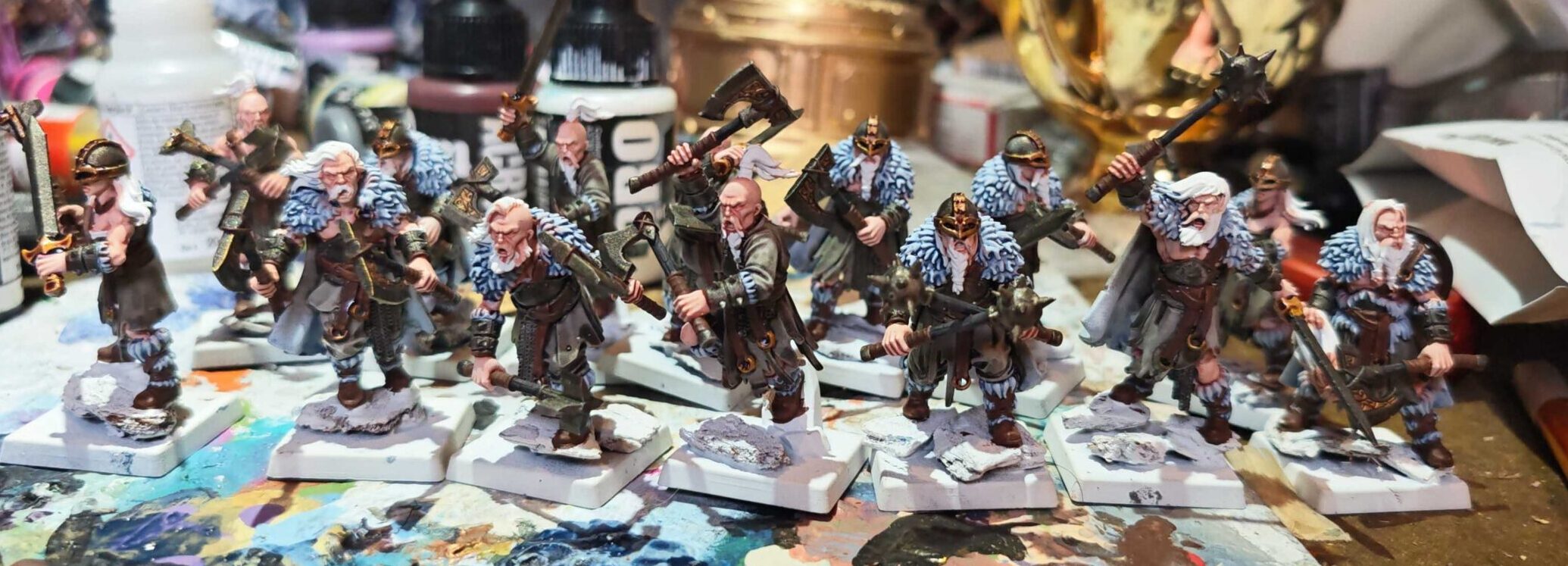
The prospect of ambushing close to the enemy and then using thrown weapons is particularly exciting to me. Those arrival positions can put the cultists somewhere immediately relevant, and combining that shooting potential with more attacks in combat looks like a considerable increase in what I can ask them to do. I still need to test that version properly, but the bow-armed units gave me a useful first look at the opportunities.
What really stood out was the board control. With that many units threatening to arrive, covering every useful approach becomes difficult. My early impression is that elite armies can have a particularly awkward time with this: the fewer units they have, the fewer pieces are available to screen out the avenues I want to use.
That doesn’t make the ambush plan automatic, and one game certainly doesn’t make me an expert in it. An opponent who knows what’s coming may give me a very different set of problems. But it has made me keen to explore the list further. There’s something very satisfying about an army whose smaller infantry units can shape the game while the big monsters attract everyone’s attention.
Turning a promising idea into a finished army
Forgotten North should provide an interesting setting for the magic side of the list as well. With the event using the new magic rules, including channelling and the disastrous miscast table, I’m interested in how much I can get out of the lower-level casters. Being able to reach further and push harder is appealing when I have several of them available, although the name of that miscast table is a fairly clear reminder that enthusiasm may have consequences.
A podium would always be nice, but I’m not expecting to turn up with an unfamiliar army and have everything fall neatly into place. There’s a lot to learn about how these units support one another, when to commit the monsters and how to make the best use of the ambushers. Forgotten North and BCGT give me something to work towards, and then a chance to find out how the idea holds up across more games.
Before that, though, there’s painting. There is always painting.
So far, I’ve printed and assembled the Chaos Lord on Manticore, both Chimeras, the three Magisters, five Marauders and one unit of fourteen cultists with two hand weapons. Still on the build list are two Gor units, three more cultist units and the baggage train.
Painting is already underway, and the frozen palette is starting to bring the different sculpts together. The photos here show the current work in progress, with the basing still unfinished across all of them. That shared snowy landscape will be an important final step, particularly with models drawn from several different ranges.
Painting is usually my biggest hurdle, so I’ve broken the project down into manageable groups. I want to keep making progress without getting bored or looking at the whole army and feeling overwhelmed. The frozen palette and shared basing give me a direction to work towards, while the variety of models should give me some opportunities to change what I’m working on.
I’d love the finished army to do well on the painting side too, although Forgotten North is one of the toughest arenas in the country for that. Best painted is a lovely ambition to have; it also means putting your army next to some exceptionally good work. For now, the job is to make each group look how I want it to look and steadily bring the whole project together.
That’s where the army stands: an idea rooted in the Chaos I loved when I started the hobby, a growing collection of models on the workbench, and one practice game that has already changed how I’m thinking about the list. I’ll keep sharing the progress as November gets closer, including the painting, the Beastmen choices and whether the next outing lives up to what I’m imagining.
In the meantime, I’m interested in how you’d approach that missing piece. What would Beastmen from the frozen wastes look like to you? Shaggy northern creatures, stranger mutations, or something else entirely?

1 Comment
Great read. Thank you.